E-commerce
Pickup points vs. home delivery: what do customers prefer?
5 November 2025
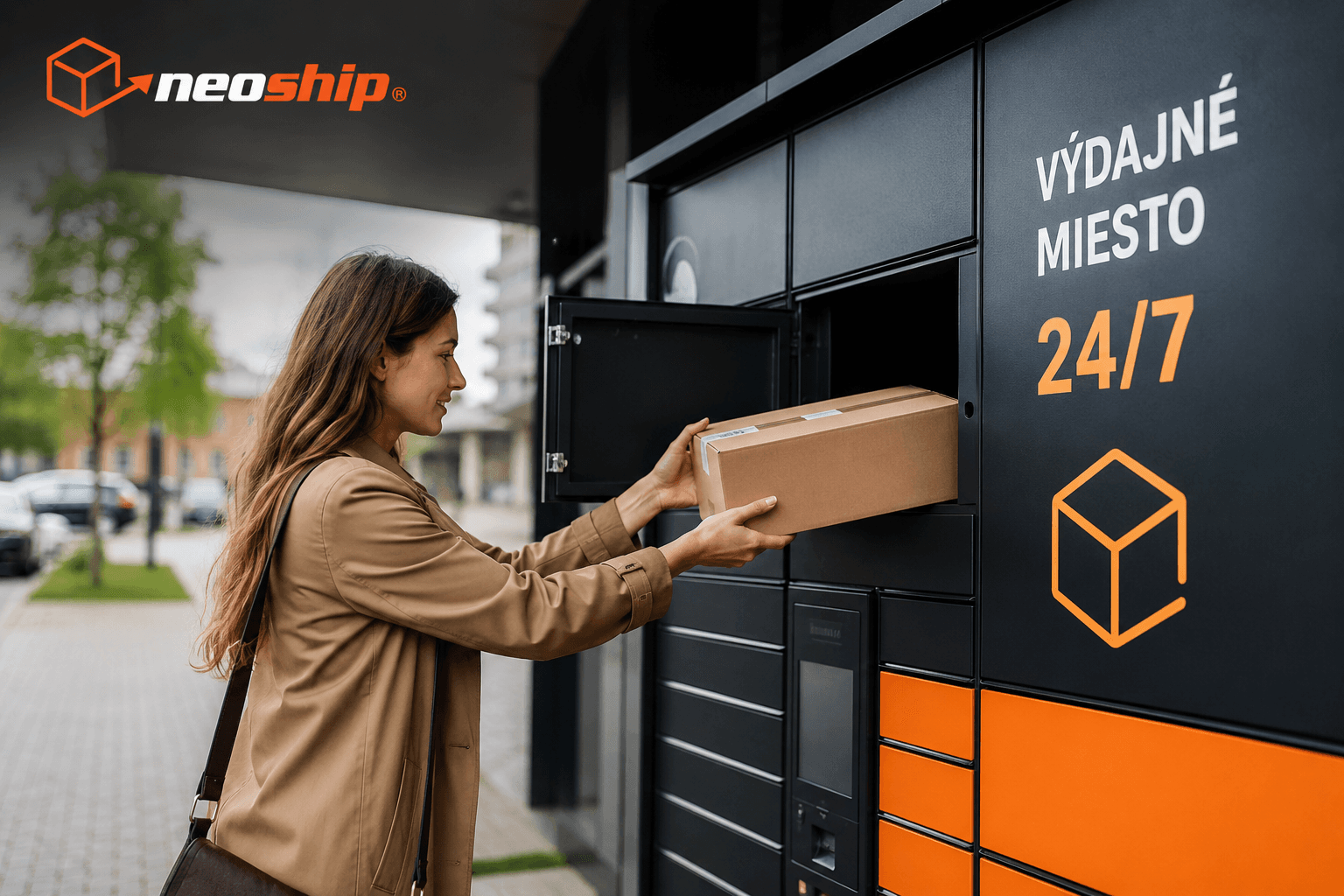
Slovak and Czech customers choose pickup points more and more often. What is behind the trend and what does it mean for e-shops?
For many years home delivery was considered the most convenient option in online shopping. The customer ordered the goods and expected a courier to bring them right to the door. In recent years, however, shopping behaviour has changed considerably. Pickup points, lockers and partner outlets have become a standard part of e-commerce logistics.
In 2026 more than 45 % of Slovak customers already choose a pickup point. We see a similar trend in the Czech Republic, where customers have been used to pickup networks for even longer. This shift is no accident. Pickup points solve several practical problems for customers at once: time, flexibility, price and the certainty of delivery.
For e-shops that means one thing. Pickup points are no longer just an additional shipping option. They are becoming one of the main delivery methods.
Why customers increasingly choose pickup points
The greatest advantage of a pickup point is freedom. The customer does not have to wait at home for a courier, plan their day around the delivery or worry about whether they will be at the address when it arrives.
They simply collect the parcel whenever it suits them.
For many customers that is more convenient than home delivery – especially if they live in a city and pass a parcel locker, a grocery shop, a newsagent or a shopping centre every day, where they can pick the shipment up on the way home from work, school or shopping.
Pickup points work well mainly because they have adapted to customers' real lives. Not the customer to logistics, but logistics to the customer.
Home delivery still has its place
That does not mean home delivery is losing its importance entirely. It still matters above all for large, heavy or more expensive products. If a customer orders furniture, a larger appliance, a bulky shipment or goods they do not want to carry around, home delivery is the natural choice.
Delivery to an address is also preferred by customers who:
- work from home,
- live outside the city,
- have no pickup point nearby,
- order heavy or bulky goods,
- want the shipment handed to them personally,
- need express delivery.
An e-shop should therefore not replace home delivery with pickup points completely. The right strategy is to give the customer a choice and communicate it well.
Price is still one of the main reasons
One of the most important factors when choosing a delivery method is price. Pickup points are often cheaper for the customer than courier delivery to an address.
With smaller orders the price difference can decide whether the purchase is completed at all. If a customer sees that home delivery costs significantly more, they will often choose a pickup point or a locker instead.
That is an advantage for the e-shop too. Delivery to a pickup point tends to be more efficient in logistics terms, has a higher delivery success rate and reduces the number of failed delivery attempts.
That means lower costs and fewer complications.
Flexibility is decisive above all in cities
In larger cities the pickup point trend is even more pronounced. Customers often have several options within walking distance or on their way to work.
Parcel lockers are also available around the clock. That is a huge advantage for people who work long hours, travel or simply do not want to deal with opening hours.
For the customer it is important to be able to choose:
- a place close to home,
- a place close to work,
- a locker available 24/7,
- an outlet with longer opening hours,
- the cheapest option,
- the fastest option.
The more relevant options an e-shop offers, the smaller the chance the customer abandons the purchase in the cart.
Pickup points reduce the problem of failed delivery
With home delivery the biggest problem is timing. The courier arrives, the customer is not at home, does not pick up the phone or does not manage to take the shipment. The result is repeated delivery attempts, redirecting the parcel or sending it back.
A pickup point significantly reduces this problem. The parcel waits for the customer for several days and they collect it at a convenient time.
For the e-shop that means:
- fewer failed deliveries,
- less communication with customer support,
- a lower risk of the shipment being returned,
- more predictable logistics,
- a happier customer.
With cash-on-delivery orders in particular, a pickup point can be an advantage, because the customer has more time and flexibility to collect the shipment.
How customer behaviour is changing in the Czech Republic and Slovakia
Both Slovakia and the Czech Republic have a very strong market when it comes to pickup points. Customers have quickly got used to the combination of lockers, pickup points and partner outlets.
In the Czech Republic this trend has felt natural for much longer. Customers often expect to be given several collection options when completing an order and to be able to pick a specific place on a map.
In Slovakia the habit has accelerated sharply in recent years. If more than 45 % of customers already choose a pickup point, this is no marginal phenomenon. It is standard behaviour for a large part of the market.
For an e-shop that means pickup points have to be part of the basic logistics offering.
What an e-shop needs to have sorted out
Having a single „pickup point“ option at checkout is not enough. The customer experience has to be simple and clear.
An e-shop should have the following covered in particular:
- choosing a specific pickup point in the cart,
- a map or a search by address,
- a clear shipping price,
- information about the estimated delivery,
- the availability of pickup points by carrier,
- correctly sending the details to the shipping system,
- automatic notifications to the customer,
- an easy way to change or redirect a shipment.
If a customer cannot quickly find a suitable pickup point, they may abandon the order. Choosing the delivery method is therefore an important part of the conversion process.
Why the choice of carriers is a strategic topic
Pickup points are not only about price. Every carrier has a different network, different availability, a different delivery quality and a different customer experience.
For an e-shop it is important to track:
- which pickup networks customers use most,
- where most problems arise,
- which branches have a good collection success rate,
- which carriers generate the most complaints,
- how fast shipments are delivered,
- what share of shipments goes uncollected.
The best logistics strategy is not to offer everything to everyone. The best strategy is to offer the options that customers really use and that make economic and operational sense for the e-shop.
How pickup points influence conversions
Shipping is one of the most sensitive moments in the buying process. The customer already has the products in the cart, but can still decide not to complete the order.
If at this step they do not find their preferred delivery method, if the price is too high or if choosing a place is complicated, the conversion rate drops.
Pickup points can help increase order completion, because the customer gets a cheaper and more flexible alternative to home delivery.
That matters a great deal, especially with smaller orders. If a product costs 20 euros and home delivery 5 euros, the customer starts to hesitate. If they have a cheaper pickup point available, they are more likely to complete the order.
Pickup points also help e-shops scale
For growing e-shops logistics is often the bottleneck. The more orders, the greater the pressure on dispatch, carriers, customer support and problem solving.
Pickup points can ease that pressure. Delivery is more efficient, less dependent on the customer being at the address and often cheaper.
For an e-shop that is growing or expanding into the Czech Republic and Slovakia it is therefore important to have pickup networks well set up from the very beginning.
How to prepare for the trend
If an e-shop has not yet got pickup points properly sorted, it should start with data. Assuming what customers want is not enough. You need to watch what they actually choose.
A practical approach can look like this:
- Evaluate the share of home deliveries and pickup points.
- Look at the differences by country, region and category.
- Track the shipping price and its impact on order completion.
- Compare delivery success rates between carriers.
- Check whether choosing a pickup point in the cart is easy.
- Test highlighting the most advantageous shipping option.
- Evaluate uncollected shipments regularly.
The goal is not to push the customer into one option. The goal is to give them a convenient choice while keeping logistics under control.
Conclusion
In 2026 pickup points are becoming one of the most important delivery methods in Slovak and Czech e-commerce. If more than 45 % of customers in Slovakia already choose them, this is a trend e-shops cannot ignore.
Home delivery remains important, especially for bulkier or more expensive products. But for ordinary orders customers increasingly prefer flexibility, a lower price and the option to collect the parcel whenever it suits them.
For e-shops it is therefore crucial to have pickup points well integrated in the cart, to offer relevant carriers, to work with data and to follow real customer behaviour.
A pickup point is no longer an alternative for a handful of customers. It is a standard that can decide whether a customer completes the order or leaves for the competition.